Source in water canned mushroom for Pizza, Soup, and Dishes
Find 26 options for in water canned mushroom from Chinese manufacturers. Buyers can compare specifications, packaging, and certifications like HACCP and ISO to select suitable products for restaurants and food factories.
Key considerations
Products List


Comprehensive Sourcing Guide
Strategic Sourcing Guide for In-Water Canned Mushrooms
Understanding Product Specifications and Processing Methods
When sourcing in-water canned mushrooms, buyers must first distinguish between the specific processing methods that define the final product's texture and culinary utility. The market offers distinct variations, primarily categorized by the preservation medium. While some products are preserved in brine, which imparts a salty profile and firm texture, the specific inquiry for "in water" canned mushrooms refers to products where the primary liquid medium is water, often supplemented with salt. This processing method is critical for buyers aiming to control sodium levels in their final dishes or those requiring a neutral base flavor that does not interfere with delicate sauces.
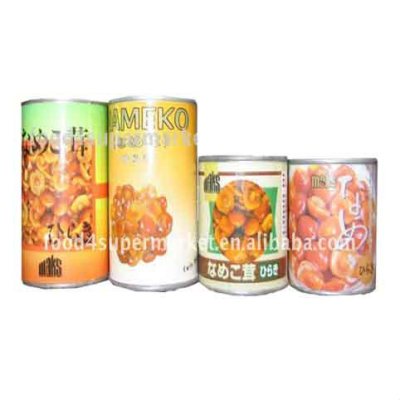
The physical specifications of these products vary significantly based on the mushroom variety and the intended cut. Common varieties available in this category include Fresh Champignon, Straw Mushroom, Nameko, King Oyster, and Shiitake. The physical dimensions are a key specification parameter, with diameter sizes ranging from 2 cm to 6.5 cm depending on the specific model and cut. For instance, certain models specify sizes such as Dia. 2-3.5-4.5-6.5cm, allowing buyers to select the exact size required for their application, whether it be for whole presentation in soups or diced for pizza toppings. The standard net weights observed in the market include a wide spectrum of packaging sizes, ranging from small 184g and 284g tins to large 2840g bulk containers. Other common standard weights include 200g, 320g, 400g, 425g, 530g, 800g, and 850g.
The packaging material is another defining technical attribute. The industry standard for these products is metal tins, though glass jars are also a prevalent option for specific premium lines or regional markets. The choice between tin and glass often depends on the buyer's logistics requirements, shelf-life goals, and retail presentation needs. The products are typically packed in cartons for secondary shipping, with the primary containment being either a tin or a glass jar. Understanding these specification variances is the first step in aligning supplier offerings with the buyer's operational requirements.
Compliance, Certification, and Regulatory Standards
Navigating the regulatory landscape is essential for B2B procurement of food products, particularly when importing from major production hubs like China. Buyers must verify that suppliers possess the necessary certifications to operate legally and safely in their target markets. The supply chain for canned mushrooms frequently references a robust set of quality management and safety certifications. High-confidence data indicates that suppliers in this sector often hold HACCP (Hazard Analysis and Critical Control Points) certification, which is fundamental for food safety management. Additionally, ISO certification is a common standard, indicating adherence to international quality management systems.
For markets with strict food safety regulations, such as the United States and the European Union, FDA approval and BRC (British Retail Consortium) certification are critical verification points. The presence of these certifications suggests that the supplier has implemented rigorous controls over their processing lines, from raw material sourcing to the final canning process. However, buyers should treat these certifications as observations of the supplier's capabilities rather than automatic guarantees for every single SKU. It is imperative to request current, valid certificates for the specific production facility supplying the order.
Beyond general certifications, buyers must verify adherence to specific product standards. The market data indicates various standard weights and models, such as 2840g, 2500g, 850g, 425g, and 400g, which serve as benchmarks for product consistency. While specific national standards (like GB standards in China) are not explicitly detailed in the general observations, the existence of defined standard weights implies a level of industrial standardization. Buyers should ensure that the supplier's declared standards match the regulatory requirements of the destination country, particularly regarding labeling, ingredient declaration, and allergen warnings.
Cost Drivers and Pricing Dynamics
The pricing structure for in-water canned mushrooms is influenced by a complex interplay of factors, including raw material costs, processing methods, packaging materials, and order volume. The observed price range in the market spans from 0.15 USD to 40 USD per unit, a wide variance that reflects differences in product size, packaging type, and order quantity. A unit price of 0.15 USD likely corresponds to a small tin or a bulk purchase of a standard weight, whereas the upper end of the range may reflect premium glass jar packaging, specialized sizes, or smaller order quantities.
The Minimum Order Quantity (MOQ) is a significant driver of unit cost. The observed MOQ range extends from 1 unit to 1880 units, with a specific data point indicating an MOQ of 100 cartons for certain high-volume or specialized lines. Buyers who can commit to higher volumes, such as the 100-carton threshold, are likely to secure more favorable pricing tiers. Conversely, smaller orders may incur higher per-unit costs due to the fixed costs of production setup and logistics.
Packaging material also plays a pivotal role in cost determination. Metal tins are generally more cost-effective to produce and ship compared to glass jars, which are heavier and more fragile. The choice between "in Tins" and "in Glass Jars" can shift the price point significantly. Furthermore, the processing method, whether "In Brine" or "In Water," can affect costs due to the specific ingredient ratios and processing time required. Buyers should analyze their total landed cost, including freight and duties, rather than focusing solely on the ex-factory price, as the weight and volume of the product (especially in glass) will heavily impact shipping expenses.
Typical Applications and Culinary Versatility
In-water canned mushrooms are highly versatile ingredients designed for a broad spectrum of culinary applications. The primary use case is as a direct ingredient for making dishes, serving as a foundational component in various food preparations. The neutral flavor profile of mushrooms preserved in water makes them particularly suitable for recipes where the mushroom's natural taste should not be overshadowed by strong brine flavors. This characteristic makes them ideal for use in soups, stews, and sauces where a clean, savory base is required.
The target user base for these products is diverse, encompassing restaurants, families, and food factories. In a restaurant setting, these mushrooms are frequently used for making pizzas, soups, and different dishes, offering a consistent quality and ready-to-use format that streamlines kitchen operations. For family consumers, the convenience of canned mushrooms allows for quick meal preparation, reducing the time spent on cleaning and slicing fresh produce. Food factories utilize these products as bulk ingredients for mass-produced food items, such as canned soups, ready-to-eat meals, and processed snack foods.
The customization options available in the market further expand the application potential. Some suppliers offer customization services, allowing buyers to request specific cuts, sizes, or packaging configurations. This flexibility enables buyers to tailor the product to specific brand requirements or unique recipe formulations. Whether the requirement is for whole mushrooms for a premium pizza line or diced pieces for a commercial soup mix, the in-water canned mushroom category offers a adaptable solution for various culinary needs.
Supplier Evaluation and Quality Control Protocols
Evaluating suppliers for in-water canned mushrooms requires a rigorous assessment of their production capabilities and quality control systems. Buyers should prioritize suppliers who demonstrate transparency in their processing methods and ingredient sourcing. The ingredient list is a critical quality indicator; for in-water canned mushrooms, the core ingredients typically include the specific mushroom variety (e.g., Fresh Champignon, Straw Mushroom), water, and salt. Buyers must verify that the ingredient list matches their dietary and labeling requirements, ensuring no unauthorized additives are present.
Quality control should extend beyond the final product to the entire supply chain. Buyers should inquire about the supplier's storage methods and shelf-life guarantees. The observed data indicates a shelf life of greater than 12 months, with some products having an expiration period of up to 3 years. Storage conditions are typically described as "Normal" or "Normal Warehouse," implying standard ambient storage requirements. However, buyers should confirm that the supplier maintains these conditions consistently to prevent spoilage or quality degradation during transit.
Lead time is another critical factor in supplier evaluation. The observed delivery time for these products is approximately 2 weeks after order confirmation. This relatively short lead time suggests an efficient production and logistics pipeline, but buyers should verify this timeline against their specific order volume and seasonal demand fluctuations. Seasonal availability can impact the supply of fresh mushrooms, which are the raw material for canned products. Buyers should ask suppliers about their inventory management strategies to ensure consistent supply throughout the year, especially during peak seasons when demand may outstrip production capacity.
Long-Term Procurement Considerations and Sustainability
Sourcing in-water canned mushrooms for the long term requires a strategic approach that considers supply chain resilience, sustainability, and scalability. The production origin is predominantly China, which offers significant manufacturing capacity and cost advantages. However, buyers should develop a diversified supplier base to mitigate risks associated with geopolitical tensions, trade tariffs, or logistical disruptions. Relying on a single source can be risky, and establishing relationships with multiple suppliers can provide greater flexibility in managing supply chain volatility.
Sustainability is increasingly becoming a priority in B2B procurement. Buyers should evaluate suppliers' practices regarding raw material sourcing, energy consumption in processing, and waste management. While specific sustainability certifications are not explicitly detailed in the general observations, buyers can inquire about the supplier's commitment to sustainable agriculture and responsible packaging. The choice between metal tins and glass jars also has environmental implications; metal is often more recyclable, while glass is heavier and has a higher carbon footprint during transport.
Scalability is another long-term consideration. As a buyer's business grows, the ability of the supplier to scale production to meet increased demand without compromising quality is crucial. The observed MOQ range of 1 to 1880 units suggests that suppliers can accommodate both small trial orders and large-scale production runs. However, buyers should negotiate terms that allow for flexible order adjustments as market conditions change. Establishing a partnership based on clear communication, shared quality standards, and mutual growth goals will ensure a stable and successful long-term procurement relationship for in-water canned mushrooms.
FAQs
What certifications do in water canned mushroom suppliers hold?
Suppliers typically hold HACCP, ISO, FDA, and BRC certifications. These credentials indicate adherence to international food safety and quality management systems, ensuring the product meets regulatory standards for export markets.
How long is the shelf life of canned mushrooms?
The shelf life exceeds 12 months, with some products valid for up to 3 years. Storage should be maintained in a normal warehouse environment to preserve quality and prevent spoilage during the validity period.
Which packaging materials are used for these mushrooms?
Products are packed in metal tins or glass jars, often shipped in cartons. The choice between tin and glass depends on logistics needs, with metal being cost-effective and glass offering premium presentation.
What is the typical delivery time for orders?
Delivery takes about 2 weeks after order confirmation. This lead time applies to standard orders, though specific timelines may vary based on order volume and seasonal production capacity.
Can buyers customize the size and packaging of mushrooms?
Customization is available for specific models and packaging configurations. Buyers can request different diameter sizes ranging from 2 to 6.5 cm and choose between tin or glass jar packaging to suit their needs.
What are the standard weight specifications for these products?
Standard weights include 284g, 400g, 425g, 850g, and 2840g. These sizes cater to various market segments, from small retail tins to bulk containers for food factories and large-scale food production.
Where are these canned mushrooms manufactured?
The products originate from China, a major production hub for canned vegetables. Buyers should verify specific factory locations and ensure compliance with local and international export regulations.